3–7
Days to First Google Lead
35%
Lower CPL with Combined Strategy
5×
Higher Lead Intent on Google
One of the most common questions we get from B2B business owners is: "Should I start with Google Ads or Meta Ads?" The honest answer is — it depends on your business, your timeline, and your budget. But there are clear principles that make one more suitable than the other in different scenarios.
This guide breaks down everything you need to know to make the right choice for your specific situation — and explains exactly when using both together delivers the best results.
The Fundamental Difference: Intent vs Awareness
Understanding why these platforms work differently for B2B is more important than any tactical comparison.
Google Ads captures demand. Your ideal B2B buyer is actively searching for what you sell. They type a specific query — "industrial cleaning services Pune" or "custom software development company Mumbai" — and your ad appears. The intent is there before you spend a rupee. You're not interrupting — you're responding.
Meta Ads creates demand. Your buyer is not searching for your service right now. They're on Facebook or Instagram, consuming unrelated content. Your ad interrupts their scroll with a message that sparks interest they didn't have 10 seconds ago. You're creating awareness and consideration from scratch.
The Practical Implication
Google Ads typically delivers faster leads with higher intent. Meta Ads typically requires longer nurturing but can access a much larger audience. For most B2B businesses with limited budgets, Google Ads is the better starting point — Meta becomes more powerful once you have a retargeting audience built.
Google Ads: Best Use Cases for B2B
Google Ads delivers the strongest B2B results when:
- There is existing, measurable search demand for your service (use Google Keyword Planner to verify)
- Your sales cycle is short-to-medium (days to weeks, not months)
- You can respond to enquiries quickly — Google leads expect fast follow-up
- Your average deal value justifies the CPL (typically ₹500–₹3,000 for B2B services)
- You want predictable lead volume that can be scaled with budget
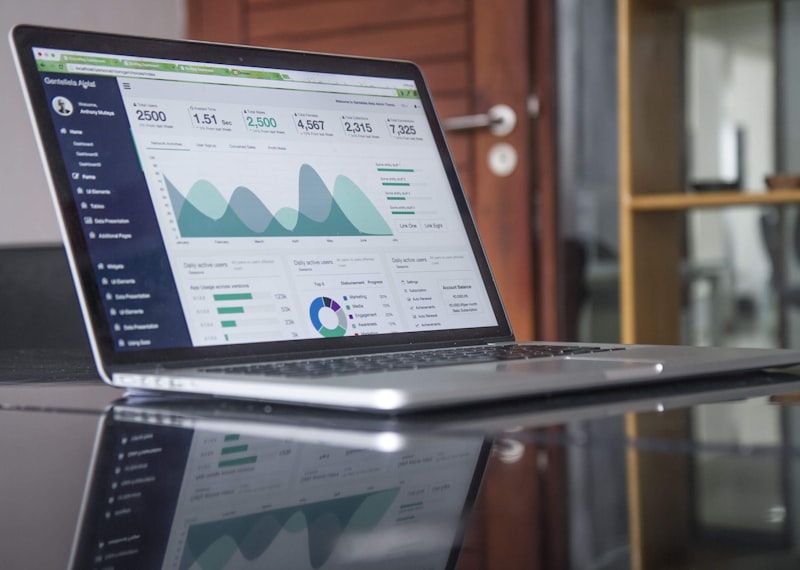
Google captures existing demand; Meta creates new demand — both have a role in B2B
Meta Ads: Best Use Cases for B2B
Meta Ads works best for B2B when:
- Search volume for your specific service is low — not enough people are searching for what you sell
- Your ICP (ideal customer profile) can be defined by specific interests, behaviours, or job titles
- You want to stay top-of-mind with warm audiences between touchpoints
- You're launching a new service or entering a new market where awareness needs to be built first
- You have strong creative assets — case studies, testimonials, results imagery
Side-by-Side Comparison
Here's how the two platforms compare across the dimensions that matter most for B2B lead generation:
- Lead intent: Google — high (active searchers) | Meta — medium-low (passive audience)
- Time to first lead: Google — 3–7 days | Meta — 2–4 weeks
- Typical B2B CPL: Google — ₹800–₹2,500 | Meta — ₹400–₹1,200
- Lead quality: Google — higher | Meta — requires more qualification
- Audience size: Google — limited to search volume | Meta — near unlimited
- Creative requirements: Google — text-heavy | Meta — visual and video-first
- Retargeting: Both — excellent when set up correctly
Common Misconception
Meta's lower CPL looks attractive — but lower CPL doesn't always mean lower cost per qualified lead. If Meta leads convert at 20% the rate of Google leads, a ₹600 Meta CPL might actually represent a ₹3,000 cost per sales-qualified lead — more expensive than Google's ₹1,500 CPL with a 50% qualification rate.
The Combined Strategy: How to Use Both Together
Our highest-performing B2B accounts use Google and Meta together in a coordinated strategy:
- Google Search Ads for high-intent keywords — capture buyers actively looking for your service right now
- Google Display + YouTube for brand awareness — keep your name visible as buyers research
- Meta prospecting to reach ICP-matched audiences who aren't yet searching — build awareness and nurture interest
- Meta retargeting to re-engage everyone who visited your website from Google Ads — dramatically increases overall conversion rate
This combined approach typically delivers a 20–35% lower blended CPL compared to either platform alone, because Meta retargeting catches the buyers who visited from Google but didn't convert immediately.
Budget Allocation Recommendation
For a B2B business starting with a combined monthly budget of ₹50,000:
- Month 1–3: 80% Google Search, 20% Meta retargeting. Build data, test messaging, establish baseline CPL.
- Month 4–6: 65% Google Search, 25% Meta prospecting, 10% Google Display. Start scaling what's working.
- Month 7+: Optimise split based on actual CPL and lead quality data from your specific industry.
Key Takeaways
- Google captures demand — start here if search volume exists for your service
- Meta creates demand — add this once you have retargeting audiences and creative assets
- Lower Meta CPL doesn't always mean lower cost per qualified lead — track the full funnel
- The combined strategy delivers the best blended CPL and highest total lead volume
- Always start with 80% budget on proven intent channels before expanding to awareness channels
AG
AG Insights Team
AG Insight Digital · Mumbai
AG Insight Digital is a Mumbai-based performance marketing agency specialising in Google & Meta Ads, B2B lead generation, and web design. We've managed 200+ projects and generated 975+ qualified B2B leads for clients across India.